
Peace-Making
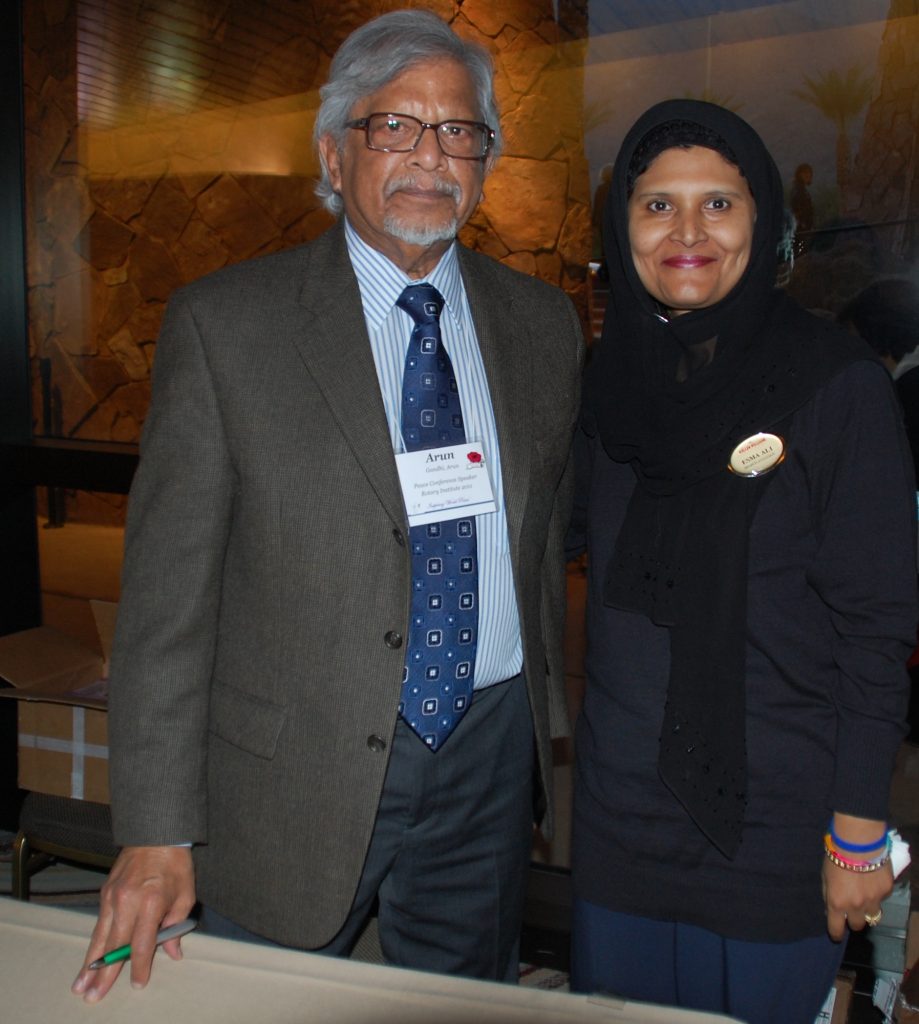
At a Peace Conference, I met Arun Gandhi, the grandson of Mahatma Gandhi. We discussed his grandfather’s courage in unleashing India from the British chain. It is difficult to challenge the occupation of your land from an elephant. Gandhi employed non-violence against the enemy. His family pulled Indians in facing the British regardless of injury. Gandhi led hunger strikes which resulted in suicidal deaths of many.
To grasp his mindset, read: An Autobiography: The Story of My Experiments with Truth, by Mahatma Gandhi.
In Dying to Win, Dr. Robert Pape analyzes the strategy of suicides in removing the occupier to regain the land. It is an eye-opener. I have quoted Pape in my own book. Islam says to fight bravely even if there is a chance of death. However, Islam forbids an outright suicide mission. “Muslims” do not always practice the rules of Islam. Dr. Pape provides insight into the suicides.
Can we achieve World Peace?
“Peace begins at home, in our families, then communities. It begins with you and me, as we strive to get to know each other better. I have written the book so that people can grasp correct information about Islam. Through dialogue, we can attain results one peace at a time!”
We cannot leave it up to the Politicians and World leaders to resolve conflicts.
“I didn’t write this book because I had all the answers; I wrote it because I found the courage to ask the right questions.”
Peace-Making
Peace begins when people choose understanding over division. In today’s world, religious differences often create distance between communities, but meaningful conversation has the power to bring people together. Through education, compassion, and respectful dialogue, we can build stronger connections across faiths and cultures.
Was Jesus A Narcissist?: A Muslim’s Defense of Jesus! was written to encourage thoughtful discussion between Muslims, Christians, and readers seeking deeper understanding. The purpose is not to create conflict, but to inspire conversations rooted in knowledge, respect, and mutual understanding.
True peace-making requires listening to perspectives different from our own. When we approach faith with curiosity instead of judgment, we open doors to unity, empathy, and shared humanity. By exploring scripture, psychology, and interfaith viewpoints, readers are invited to reflect on common values that connect us all.
Peace is not achieved through silence it is built through honest dialogue, education, and the willingness to understand one another. Every respectful conversation becomes a step toward a more compassionate and united world.